

Eleven minutes.
If I tap “Begin,” and leave now, I know I will arrive in 11 minutes. My grocery order will be ready a few minutes before then, so all I need to do is pull up, text a code and wait for the store employees to load everything. I grab a quick drink of water (from the faucet because I’m in a rush) and then hop in the car. Press a button, the car starts. As I pull away, I press another button and the garage closes behind me.
Soon after I pass through the first intersection (a green light, yay!), my screen lets me know there’s a slowdown ahead and offers an alternate route that will take a total of 12 minutes. Oof. If I stick with the original route, I may be late to get groceries, but if take this new route, I am – as of now – guaranteed to be a minute later. Comparing 12 to 11… that’s 8% MORE time! I commit. Let’s take the new route.
If the Swiss are known for their precise timepieces, and Japanese are known for rail systems that are rarely a minute late (or early), Americans are known for time optimization. There are also places around the world where time fades into the background as something that’s just “there,” to be referenced when needed but not a chisel that’s shaped a culture.
While spending* time in Spain earlier this year, we felt this. While buying groceries, we felt the American urge to rush to place our food on the conveyor belt so as not to “take” (or more dramatically, “steal”) time from the cashier or others in line. Anna, the cashier on this specific day, noticed our rush and simply said “tranquilo” which essentially means “relax.” It took us a few weeks to break these habits.
Since we used public transport a lot in Spain, we grew to some level of comfort around the metro suddenly being taken out of service. It was usually punctual but there were a few times where, as we were literally boarding the train, security kicked everyone off and the train continued clacking along with only a driver.
We had a similar experience with time in Guatemala, where aside from knowing whether it’s morning (buenos dias), afternoon (buenas tardes) or evening (buenas noches), time isn’t something people stress about. In fact, now that I think about it, the only time (no pun intended) I thought about time was when catching our shuttle from the hotel, and setting an alarm to wake up for group activities. I don’t think I saw a clock here, and there’s no public transport that runs on any sort of schedule. Instead, time is very big, i.e. measured against months and years. This may be due to the Mayan indigenous people who are still deeply connected to the Mayan calendar which roughly equates to a nine-month cycle, aligned to the human gestation period.
So we never really “knew” what time it was in Guatemala. When ordering potable water delivery, the delivery person would just show up. There’s no tracker, no delivery window, it just happens — whenever it happens. The city water we used to fill our cistern (a water storage tank) and pila (a washbasin for water storage) turns on every Tuesday, Thursday and Saturday, but there’s no set time when this happens other than “morning” and sometimes it doesn’t come at all. We simply can’t know when things will happen.
*Spending time is such a funny concept but it tracks as something very American; my time is valuable, therefore I spend and expect something in return.
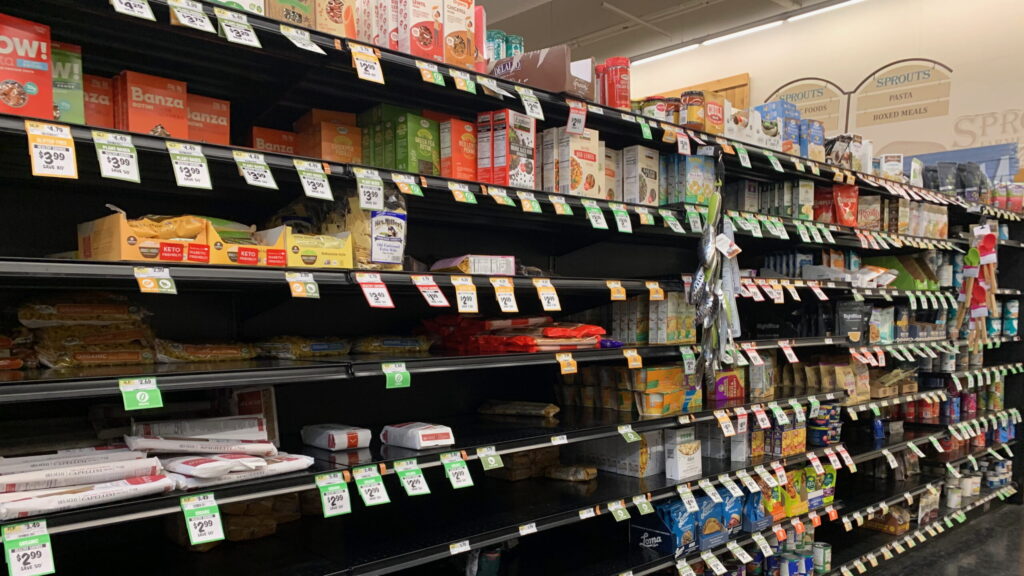
The new route wasn’t too bad. I was guided around some construction and it accurately predicted when I’d arrive: 12 minutes exactly. As I pull up, I get a notification that my groceries are ready, but a few items were substituted. Uh oh. Three things were out of stock, so I pray to the gods of grocery store abundance that a suitable alternative for each has been found. No organic grapes? I know grapes are on the “dirty dozen” list for pesticide residue, so best not to risk it. Decline. No pre-sliced baby portabella mushrooms? Ok fine, I guess I’ll spend a few minutes slicing whole ‘shrooms. Accept. No dairy-free chocolate chips? Shit. What do I do? I’ve already committed to making chocolate chip cookies, but promised I could make them dairy free. Do I cut up a chocolate bar? No, the recipe I researched said “chips” not “chunks.” Decline.
Gabe is delivering to my car today. After reconciling the substitutions, the app says he’ll be out in “less than 5 minutes” (which feels wildly imprecise after my aforementioned route optimization) but I took it as an opportunity to catch up on some emails, scroll socials and plan my route to the natural food store that will surely have dairy-free chocolate chips. Right?
Spanish grocery stores (at least the Consum and Mercadona we visited regularly), had pretty much everything, but not a lot of “choice.” You want peanut butter? You can have smooth or chunky; one brand, two options. Toothpaste? Slightly more options, but nowhere near the full aisle of toothpaste we’re used to in the US. However, the one thing Spain had in abundance in every store was jamòn (ham). Serrano, iberico, multiple brands, full cured legs wrapped in cloth (and some in a special bag), or fresh sliced by the butcher. Jam is obviously a priority in Spain and you always know for certain there will some some type of Jamòn available to you. What took the longest to get used to is the stores being closed on Sundays. Some were open, but they were smaller, usually owned by foreigners who franchise the store name, but can break some of the rules around holy days. We planned shopping trips in advance, and could only laugh on the few occasions we walked to the store but had to return home empty-handed because they were closed. At least they stay open through siesta time, from 2-4PM. Most of the time.
Guatemala was a different story. If you want variety, you get it in abundance, but only when choosing the specific store you want to shop at. Grocery stores, especially what we call “big box” stores are not a thing. Most grocery stores are small “tiendas” which are more like “corner stores”, or convenience stores” in the US. They have very limited shelf space and usually sell the basics like toilet paper, chips, sodas, etc. but each store is unique.
You have to do some research by visiting each one and asking where to find special items like yogurt, butter, or maple syrup. Each tienda also seems to have a specialty item they are proud to sell in front of the store. Sometimes you’ll find fresh tomatoes, or plantains or sweet breads, grown or made by the owner of the store or their friends and family. You’ll never find hours posted on a tienda window (because they usually don’t have windows), and you’ll probably see one open on Tuesday, but closed at 2PM on a Saturday for… reasons? It was really hard to plan meals in Guatemala because they simply don’t eat like we do in the US. We like to think every meal should be vastly different, whereas in Guatemala some families eat the same thing every night. That consistency is perhaps by choice, but I’d imagine it’s in large part because it’s just hard to reliably have access to alternatives.
For the freshest produce Guatemala, you’ll want to visit a street market. Here you’ll find any number of fresh items: vegetables, fruits, meats, home goods, spices, etc. While this can be exciting, it’s also a culture shift from the sterile grocery store experience elsewhere in the world. Sterile in the sense of hygiene, and sterile in the sense of “everything looks the same.” Can you be sure the chicken parts displayed on the street are good to eat? Actually, yes. The farmer who is selling that chicken takes pride in what they cultivate and almost certainly butchered the bird that morning. Do you have that certainty in a US grocery store? It may feel like it, but it’s nearly impossible to know for sure. It’s an illusion.


The supermarket system with its sprawling supply-chain and efficient logistics is provided to customers who value their time immensely. Stores know that people in the US prioritize convenience and consistency over quality and seasonality. That’s why there are such expansive refrigerated and frozen sections in US stores. People want to grab something off the shelf, literally frozen in time, and know that they are in full control of when something needs to be consumed. This allows you to stock up on items in bulk, and pull flatbed carts of frozen goods down grocery store aisles a full-size car could navigate. We like to be in control. We like to know.
While I was planning to be home, already cooking for tonight’s dinner with friends, I am thankful I am a planner who budgeted a 15-minute buffer for this grocery run. I already gave up a minute with the route to the store, and another minute or two approving and declining substitutions, but I still have enough time to run to the health food store nearby. It’s more expensive, but it’s the only place I know of right now that is almost guaranteed to sell dairy-free chocolate chips. Six minutes. I got this.
America as a whole, has always worshipped efficiency. From westward expansion to industrialization, the culture rewarded speed, ingenuity, and scale over meticulous perfection. Efficiency is the lubricant within a capitalistic machine. Dominoes is not known for having the best pizza, but they were the first to provide a pizza tracker that gave you that all so satisfying sense of knowing. Almost like a peek into the digital window of the kitchen, you could now know when the pizza was being prepared, baked, boxed and delivered. Sales went through the roof, and can be attributed to the idea that people simply wanted to know more. Americans, in particular, are conditioned to avoid anxiety at all costs, and the constant access to information, tracking, and updates offers a false sense of control.
American’s pioneered efficiency with the Pony Express, and with the first rail systems. Fast forward to now, when Amazon will deliver a package in less than two hours and you can order a slurpee and hot dog from the local 7-11 and watch the status update in real time as the delivery is completed. All of this only served the individual though – there’s no benefit to society as a whole. In fact, most would say it’s detrimental. Just think of all the local bookstores that were shut down because of the initial expansion of Amazon. Now, it’s not just bookstores, it’s many kinds of small businesses that are at risk because they can’t provide enough knowing, efficiency, or consistency.
So does the mere fact that Japanese rail systems and Swiss watches exist imply they have a similar, cultural demand for efficiency? No. The Japanese rose above negative connotations of “Made in Japan” which came up after World War II. They became obsessed with efficiency, quality and collective reputation. The punctuality of their trains became a symbol of this. This cultural identity is important because Japan is a collectivist society meaning they do things as individuals to benefit the whole. Going back to trains, for example, a late train is seen as a failure to respect the thousands of people relying on it. One person’s lateness is a burden on the group. Operators have been know to issue public apologies even when a train is 20 seconds early!
In Japan, there’s also a cultural undercurrent of transience and impermanence. Precision and order are ways of bringing harmony into a fleeting, fragile world. It’s deeply cultural and not purely the result of maniacal capitalistic efficiency. While you might say that Japanese precision comes from collective harmony and pride in the system, Swiss precision grew from individual craftsmanship and pride in the object.
The Swiss on the other hand (ok, maybe pun intended this time… ah, and again!), think of time quite differently as well. While precision timekeeping is definitely a cultural identity for the Swiss, the value patience because without patience, you can’t craft anything of real quality. Swiss craftsmanship, especially in watchmaking, is rooted in an ethos of patience. Where American culture tends to prize speed and efficiency, the Swiss believe true quality takes time. This philosophy is embodied by their watches, which can take anywhere from 6 months to 3 years to perfect. The number of person-hours that goes into building them is a huge contributor to the price you’ll pay for this precision. Time is the womb of craft. There’s a shared respect for quality, craft and skilled artisans.
Yes. Dairy-free chocolate chips acquired. Tap my phone to pay, and I’m on my way back home to start cutting mushrooms and prepping cookie dough. I really hope our friends aren’t early. Maybe they can be a few minutes late so we can tidy up the house some more. I’m excited to see them, but I feel stressed. Seven minutes, no traffic. Let’s go.
The thing about time is that it’s constant. If you’re an astrophysicist, you may cringe at that statement (relativity and all), but what I mean is that it doesn’t stop for you. It keeps going no matter what, and how we adapt to it, optimize it, abuse it or ignore it is entirely influenced by the culture we are in. It’s the thread this security blanket called “knowing” is made from. While time is constant, it doesn’t add certainty. Certainty and knowing is an illusion based on how we think about time. If that two-hour delivery were always two hours and thirty minutes, you might not care, so long as it was consistent and you could “know” when the delivery would happen.
We wander through life with expectations, some more rigid and clear than others. We know exactly what we want because we know exactly where we can get it and when it will be available. We don’t appreciate that we can have tomatoes and apples year round, because we know we can get them any time we want. It’s this certainty, built on efficiency and scale that the US is known for, but it lacks a soul and ignores the collective good. Certainty fuels capitalism to the point where we’re overloaded with information, schedules, status updates and choice. When two-hour delivery isn’t enough, we build flying robots that deliver goods in 30 minutes, with certainty and tracking for our anxious minds.
No country is perfect, and people tend to thrive in – or at least make the best of – the environment they’re in. But I’d challenge the notion that knowing, that certainty are more important than collective good. There’s a cost to over-optimization and it’s loneliness. What we witnessed in Spain was an abundance of people who want to help. People who want to have a conversation with you and share their life and passions.
In Guatemala, we lived in a community where people didn’t have much, but were so proud of what they did have and were genuinely excited to share it. The same smile that greeted us as we purchased our avocados (“aguacates”) was the same smile that greeted the first avocado to be plucked from the tree this season. It was picked fresh, by hand and meant to end up on a plate within a day not because efficiency matters, but because that’s when it would taste the best. Knowing in this culture is to be known. I know where to buy avocados because I know the vendor and they know me.
In a system where we aren’t fully known, and we rarely get to know our neighbors, there’s a story we’re told that we can’t trust anyone and we can’t trust the system. So knowing matters. Certainty matters. Is it real though?
As I wait at the last red light before I turn towards home, I get a text. Dinner is off. One of the kids has a stomach bug.
I should have known.